 |
 |
 |
 |
|
 |
|
Aspergillus niger |
|||||||||||||||||
|
Characteristics
Shape and Size
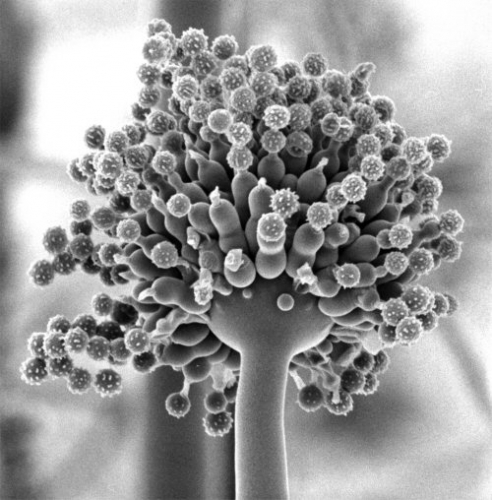
Conidiophores are 400-3000 µm long, terminating in a globose vesicle (30-75 µm in diameter). Conidia, 4-5 µm in diameter are very rough and globose and black in color.
Genome Information
Aspergillus niger ASM285v2, RefSeq NC_007445.1, circular DNA, Size 0.031103 Mb, GC% 26.9, Protein 16, rRNA 2, tRNA 25, Gene 43 https://www.ncbi.nlm.nih.gov/nuccore/NC_007445.1
Food Source
contaminated water
Pathological Factor
3-nitropropionic acid and ochratoxin A are two mycotoxins produced bt the fungi. Ochratoxin-A (OTA) is a fungal metabolite with potential toxic effects on the central nervous system.
Disease
invasive pulmonary aspergillosis, otomycosis
Symptoms
Lung disease, Fungal ear infection, Ear pain, Impaired hearing, Ear inflammation
Affected Body Organs
lungs, CNS,ear
|
||||||||||||||||||
|
||||||||||||||||||