 |
 |
 |
 |
|
 |
|
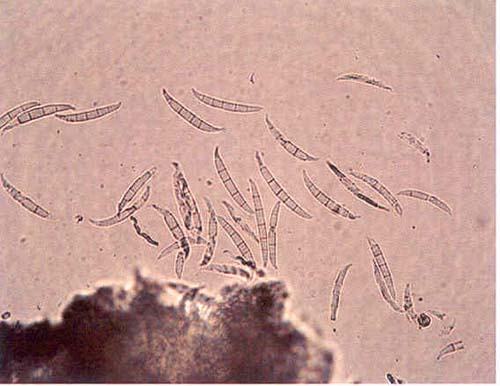
Fusarium graminearum |
|||||||||||||||||
|
Characteristics
Shape and Size
Banana-shaped,
Genome Information
Fusarium graminearum PH-1, linear DNA, GenBank: AACM00000000.2, Size 72.91Mb, GC% 48.3, Protein 26,620, rRNA 162, tRNA 633, Gene 13,726, Pseudogene 17 https://www.ncbi.nlm.nih.gov/nuccore/AACM00000000.2
Food Source
wheat, rice, oats, and maize.
Pathological Factor
Fusarium mycotoxins are known to be highly toxic to animals, and are suspected to be responsible for acute and chronic human diseases also.The toxicity and natural occurrence of these mycotoxins in wheat . The major mycotoxins produced by F. graminearum are deoxynivalenol (DON) and zearalenone. In humans DON has been found to be potentially immunosuppressive, and may result in kidney toxicity.
Disease
kidney toxicity
Symptoms
Zearalenone may cause estrogenic issues in humans resulting in mild to severe reproductive effects.symtoms of DON toxicity includes Acute temporary nausea, vomiting, diarrhea, abdominal pain, headache, dizziness, and fever.
Affected Body Organs
kidney, stomuch, head
|
||||||||||||||||||
|
||||||||||||||||||