 |
 |
 |
 |
|
 |
|
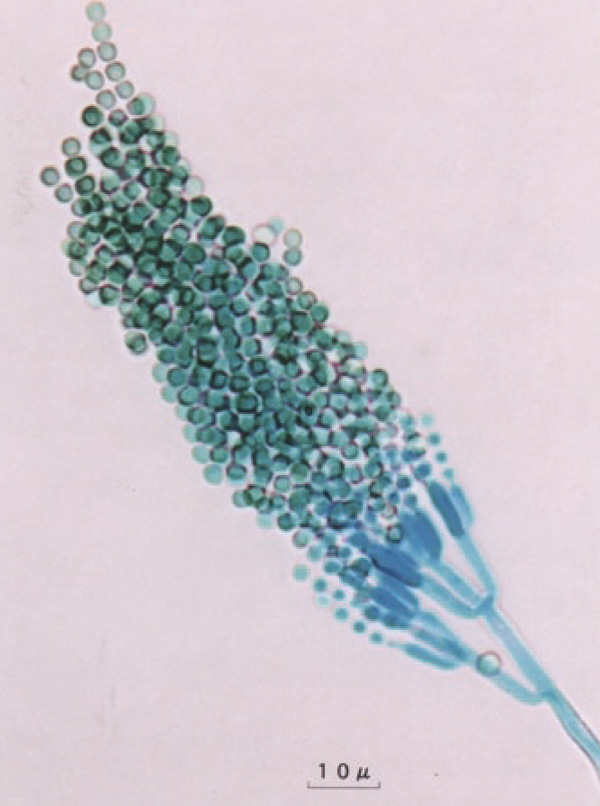
Penicillium citrinum |
|||||||||||
|
Characteristics
Shape and Size
uniform in size with a spherical shape
Genome Information
Penicillium citrinum strain DSM 1997, GenBank: LKUP00000000.1, Size 31.53, GC% 46.9 https://www.ncbi.nlm.nih.gov/nuccore/LKUP00000000.1
Food Source
milled grains and flour, and whole cereals, expecially rice, wheat and corn
Pathological Factor
Citrinin is the only mycotoxin produced by P. citrinum. P. citrinum is the major producer of this toxin, but production by P. expansum and P. verrucosum has also been reliably reporte
Disease
nonspecific deterioration in kidney function
Symptoms
citrinin causes watery diarrhoea, increased food consumption and reduced weight gain due to kidney degeneration
Affected Body Organs
kidney
|
||||||||||||
|
||||||||||||