| PlantID | 0018 |
| Botanical Name | Cichorium intybus |
| Common Name | Kasni |
| Classification | | Kingdom: | Plantae | | Subkingdom: | Tracheobionta | | Division: | Magnoliophyta | | Class: | Magnoliopsida | | Subclass: | Asteridae | | Order: | Asterales | | Family: | Asteraceae | | Genus: | Cichorium | | Species: | intybus |
|
| Part used | Whole plant. |
| Medicinal Properties | Hepatic, Appetizer, Astringent, Carminitive, Cholagogue, Digestive, Diuretic, Laxative, Tonic, Sedative, Anti-inflammatory, Cordial, Hepato protective. |
| Medicinal Use | Combat anaemia, stimulates the stomach, the liver, spleen and the kidneys, jaundice, spleen problems, gallstones, gastritis, liver ailment, heart irregularities, headache, asthma, bilious vomiting, reducing sugars. |
| Chemistry | Monoamine, Armatine, B-phenylethylamine, Alkaloid, Tyramine, Tannin phlobaphenes. |
| Cultivation | NA |
| Regional Habitat | Aravali hill of Rajasthan, in areas upto 1800 m elevation. |
| Description | An erect glandular perinnial herb, grows upto 90 cm in height. Branches are tough, rigid and spreading. Leaves: small, entire, radical and lower pinnatifid lobes toothed, upper alternate. Flowers: bright blue in ligulate heads, terminal, axillary and clustered. Fruits: smooth angled achenes. Crowned with a ring of erect pappus scals. Flowers and fruits appears during July-October.
|
| Image | 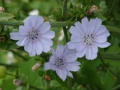 |


