 |
 |
 |
 |
|
 |
|
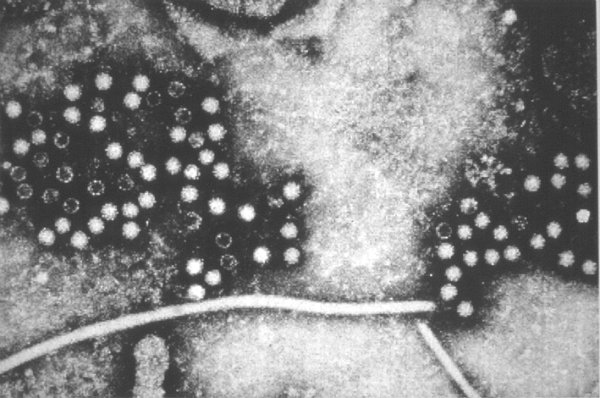
Hepatitis E virus |
|||||||||||
|
Characteristics
Shape and Size
Virions isometric (icosahedral), not enveloped 27-34 nm in diameter.
Genome Information
Hepatitis E virus is a positive-strand viruses ( GI:-9626440) has a 7176 bp single stranded linear RNA.The genome structure consists of 3 genes and 3 proteins.The GC content of Hepatitis E virus is about 57.9%.
Food Source
Foodborne infection could occur from consumption of uncooked/undercooked products from infected animal: pork or deer meat,shellfish.
Pathological Factor
Hepatitis E virus causes acute sporadic and epidemic viral hepatitis. Symptomatic HEV infection is most common in young adults aged 15-40 years and is uncommon in children. Although HEV infection is frequent in children, it is mostly asymptomatic and anicteric. As with hepatitis A, virus is detected in bile, liver and faeces before the onset of liver function abnormalities.Severe or fulminant cases may show submassive and massive hepatic necrosis.
Disease
acute hepatitis
Symptoms
Jaundice ,malaise, nausea,malaise, anorexia, abdominal pain, arthralgia, and fever, jaundice, anorexia, hepatomegaly, enderness, and vomiting.
Affected Body Organs
liver, gall bladder
|
||||||||||||
|
||||||||||||